How to Set a Contractor Advertising Budget Around Booked Jobs
Work backward from the jobs you can deliver and what each is worth. Here is how to connect ad spend, qualified leads and agency fees without relying on a universal cost-per-lead promise.

- Start with profit and available capacity, not a competitor's budget.
- Track qualified leads, booked estimates and sold jobs separately.
- Include management fees and landing-page costs in acquisition cost.
- Use your own conversion data to replace planning assumptions.
A contractor advertising budget should answer two questions: how many additional jobs can you deliver, and what can you afford to spend to win each one? A flat percentage of revenue or a promised cost per lead leaves out too much to answer those questions on its own.
This guide explains the planning math we discuss when reviewing advertising for contractors. The example figures below are hypothetical, not New Compass Media pricing, industry benchmarks or a prediction of campaign results.
Start with the jobs you want more of
List the services you want to advertise, the locations you can profitably serve and the number of new jobs your team can handle. Separate small service calls from installations or larger projects. They can have very different revenue, fulfillment costs and sales cycles.
A roofing company might prioritize replacement inspections while keeping repair calls in a separate campaign. An HVAC company might have room for maintenance visits but limited installation capacity. Putting those services into one budget can hide which work is actually helping the business.
Set an acquisition-cost ceiling
Gross profit per job is revenue minus the direct costs of delivering the job. Decide how much of that profit you can allocate to customer acquisition while still covering overhead and your profit goal. Use your own books and sales history for this decision.
For a one-time project, use its expected contribution. For recurring service agreements, be careful about counting future revenue before you know your actual retention and servicing costs. A larger projected lifetime value does not fix a short-term cash-flow constraint.
Work backward from sold jobs to qualified leads
Keep each stage separate:
- Qualified inquiry: a reachable person in your service area asking about work you offer.
- Booked appointment: a qualified inquiry scheduled for an estimate or service visit.
- Sold job: an accepted quote or confirmed paid job, using a consistent definition.
Suppose you want eight additional jobs in a month. If half of qualified inquiries become appointments and 40% of those appointments become sold jobs, each qualified inquiry has a 20% chance of becoming a job in this simplified model. You would need 40 qualified inquiries to reach eight jobs.
The formula is: qualified leads needed = target jobs / (booking rate × close rate). Express the rates as decimals: 8 / (0.50 × 0.40) = 40. If cancellations or no-shows are significant, add a show rate as another step. Never count every form fill as a qualified lead.
A worked advertising budget example
Assume that your total acquisition-cost ceiling is $300 per sold job. Eight jobs would allow $2,400 in total acquisition costs. If management and other campaign costs in this fictional example are $800, that leaves $1,600 for platform ad spend.
At 40 qualified inquiries, the allowable media cost per qualified lead would be $40. That is a planning threshold, not a claim that Google or Meta can deliver a lead at that price in your market.
- Target sold jobs: 8.
- Qualified inquiries required at the assumed conversion rates: 40.
- Total acquisition allowance: 8 × $300 = $2,400.
- Hypothetical management and other costs: $800.
- Remaining media budget: $1,600.
- Allowable media cost per qualified inquiry: $1,600 / 40 = $40.
If actual leads cost more, the plan needs to change. You might narrow the service area, focus on higher-margin work, improve appointment attendance or test a different offer. Raising the budget alone does not repair unprofitable acquisition.
Separate ad spend from the full marketing cost
The platform charges for advertising. An agency charges for its work. Landing-page development, tracking, creative production and lead follow-up and booking may also affect the total, depending on your agreement.
Use total acquisition cost per sold job = all acquisition costs / sold jobs for the overall business decision. Use media-only cost per qualified lead to understand campaign performance. These measures answer different questions, so label them clearly in your reports.
Choose a channel before spreading the budget
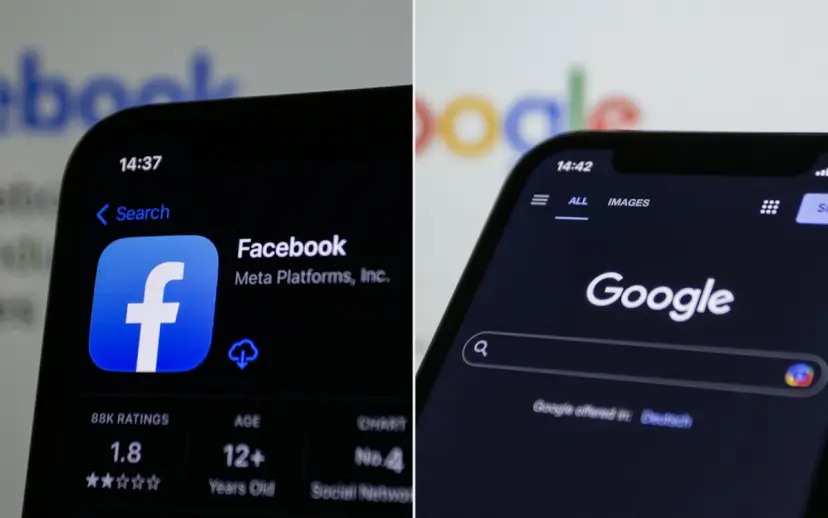
Google Ads can capture searches for an immediate service need. Facebook and Instagram ads can introduce a visual or planned project before someone searches. Read our Google versus Facebook comparison for the tradeoffs.
With a limited test budget, starting with one defined service, market and channel can make the results easier to interpret. Add channels when you can explain what the current campaign produces and your team can handle the inquiries.
What to review after launch
Record the source, qualification status, appointment outcome and sale for each inquiry. Separate spam, duplicates and out-of-area requests. Compare costs against the jobs associated with those leads, allowing for the time it takes to sell the work.
Review lost opportunities too. If qualified people are not booking, examine response time, unanswered calls and scheduling availability before concluding that the ads are wrong. If appointments are happening but quotes are not closing, review offer fit, pricing and sales follow-up.
Bring these numbers to a discovery call
Bring your service area, preferred jobs, average job value, approximate direct costs, available capacity, current spend and any lead-to-sale history. Estimates are fine for an initial conversation as long as we identify them as assumptions. Replace them with actual results as the campaign runs.
New Compass Media scopes management fees separately from ad spend. We can review the starting plan and explain what is included in your contractor marketing services before you commit.
Drew is the owner and lead strategist at New Compass Media. He builds the websites, ad campaigns and follow-up systems that keep local home service businesses booked, and writes about what's working for the contractors he works with.